
Our gin is a homage to something we frequently take for granted in Edinburgh: history.
For those of us lucky enough to call the city home, it is easy to forget that few cities around the world have buildings and monuments dating back nearly one thousand years. History and provenance are things we take seriously, and we’d be doing ourselves an injustice if we do not dive into the lively and crazy history of our favourite spirit: gin.
And so, from its origins as “Dutch Courage” to its current status as a pillar of the British economy, we explore gin’s history in the UK. It is a wild tale of excess, ruin, and redemption
A political move: 1689 – 1720s
The British love affair with gin began with a political move to weaken the English crown’s rivals. In 1689, following the overthrow of King James II, the Dutch King William III (William of Orange) took the throne in England. To celebrate, he sailed across with a delicacy to celebrate: the Dutch Jenever, a cheap and easy potent alcoholic drink flavoured with Juniper berries.
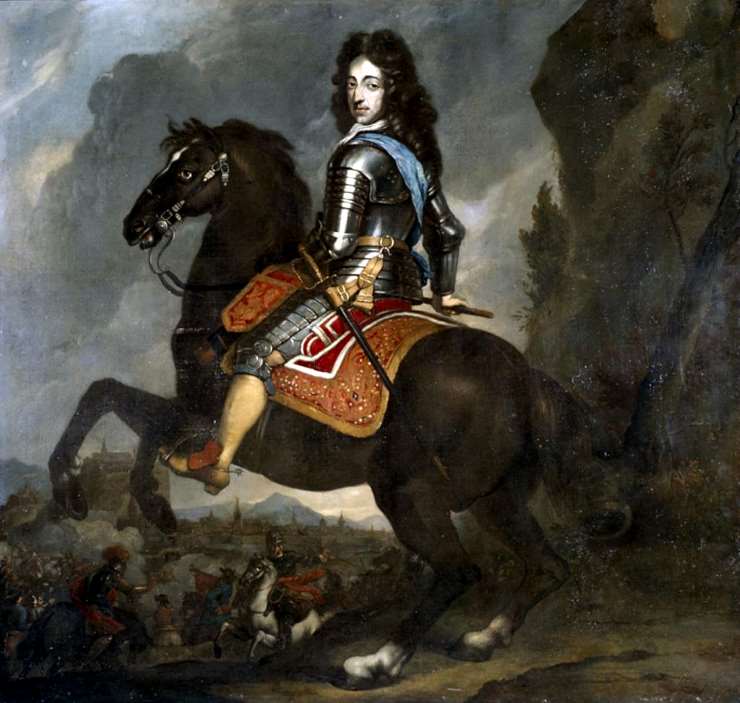
It quickly became the fashionable tipple of London.
Then, in the same year, came the 9-year war with France, an attempt in the same year to curtail the expansionist ambitions of Louis XIV of France; trade between the two nations was no more. What was a crushing blow to London’s wine industry became a boomtime for London’s gin distillers, who rode the wave of gin becoming a patriotic drink, to rival the drinking of the catholic french’s brandy.
To weaken the French economy, the King banned the import of French brandy and passed the Distilling Act of 1690, which allowed any Englishman to distil spirits from English grain.
As English artisans experimented with distillation, they enhanced their creations using the botanicals at their disposal, thanks to the ever-increasing global trade within the British Empire; spices from India and fruits from the southern hemisphere became the foundation of “London Dry Gin”.
By 1700, 1.2 million gallons of gin were enjoyed every year. With a population of 600,000, that means that every Londoner (on average) would be drinking 2 – 3 gallons a year (that’s a top end of 15 bottles of 70cl – just over a bottle a month!)
The gin craze: 1720 – 1751
As we all know, gin is pretty special. By 1720, the popularity of gin had almost doubled to the consumption of over 2 million gallons (18 bottles per year, around 2 and a half bottles a month) – by 1729, we had almost doubled – again! – to 3.5 million gallons (31 bottles per month). Here were the warning signs that London was starting to have a big problem with gin.
What began as an economic boost spiralled into a public health catastrophe: “Gin Craze.” By the 1730s, it was estimated that one in four houses in some London districts contained a gin still. The social consequences are self-evident: Death rates soared, and birth rates plummeted, earning gin a very grim nickname: “Mother’s Ruin”. The consequences of drinking alcohol during pregnancy resulted in a litany of severe and saddening consequences.
The government attempted to intervene, but as they often do, failed miserably.
By 1729, the then Prime Minister, Robert Walpole, decided to replace gin’s tax exemption, and replace it with a retail tax: the first gin act. It proposed to apply its tax to “any spirit with juniper berries or other fruit, spices or ingredients”. It didn’t take long for distillers to find a loophole, producing bland spirits with no flavourings at all, lovingly titled “Government Brandy”.
Ironically, this fuel-flavoured spirit fueled the further increase in gin consumption to 4 million gallons by 1730, supplied by 7000 gin shops (just the legal ones).
The second Gin Act came in 1933, designed to restrict public consumption of the spirit, effectively driving gin consumption underground into private living rooms. The obvious result was that home distilling became even more widespread, and by the end of the year, London was home to over 17,000 gin shops and outlets. The dismail failure was terrifyingly apparent by 1736 when the consumption hit 6 million gallons a year, and then 7 million by 1738.
At wits’ end, surrounded by high-profile scandals (including a mother strangling her daughter for gin money) gave way for the Third and Fourth Gin acts, which clamped down on the informal gin shops in private homes, and incentivised “snitching” for a cash reward. The reward these informants inevitably found was at the end of angry, probably drunken, mobs who hunted down and murdered informants.
As the Gin Craze reached its zenith in 1743, 10 million gallons of gin were being consumed every year- 14 gallons per person. That’s about 75 70cl bottles per year, or over 6 bottles per month. Now that is a proper party!
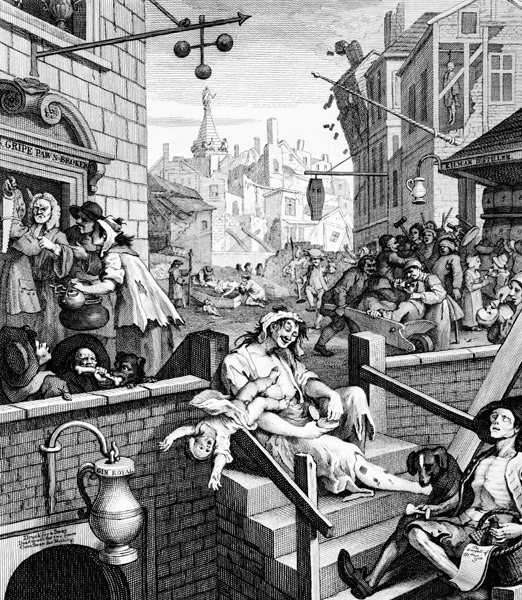
The depravity, disfunction and chaos of the time is famously depicted in William Hogarths illistration below.
Thankfully, the government found the strategy that got to the nexus of the gin problem. They realised that cheap, poor-quality gin was driving the city’s biggest problems, and found momentum by making legal sales easier, reducing taxes and increasing regulation on production. Thankfully, these moves start to remedy what has become a catastrophe, and by 1749, gin consumption dropped for the first time in over 30 years.
Published in 1751, the eighth gin act went further, but it was in a diseased crop in 1657, which resulted in a grain shortage, that effectively brought in a ban on distilling with grain, and put the brakes on gin drinking. By 1766, the annual consumption had plummeted back down to where we started this story, at 3 million gallons.
Thus, the end of one of the most destructive addiction epidemics in world history.
Refinement: The 19th Century
By the 1830s, the invention of the Aeneas Coffey column still revolutionised production. Unlike the old pot stills, the new technology allowed for a continuous distillation process, creating a much purer, neutral spirit.
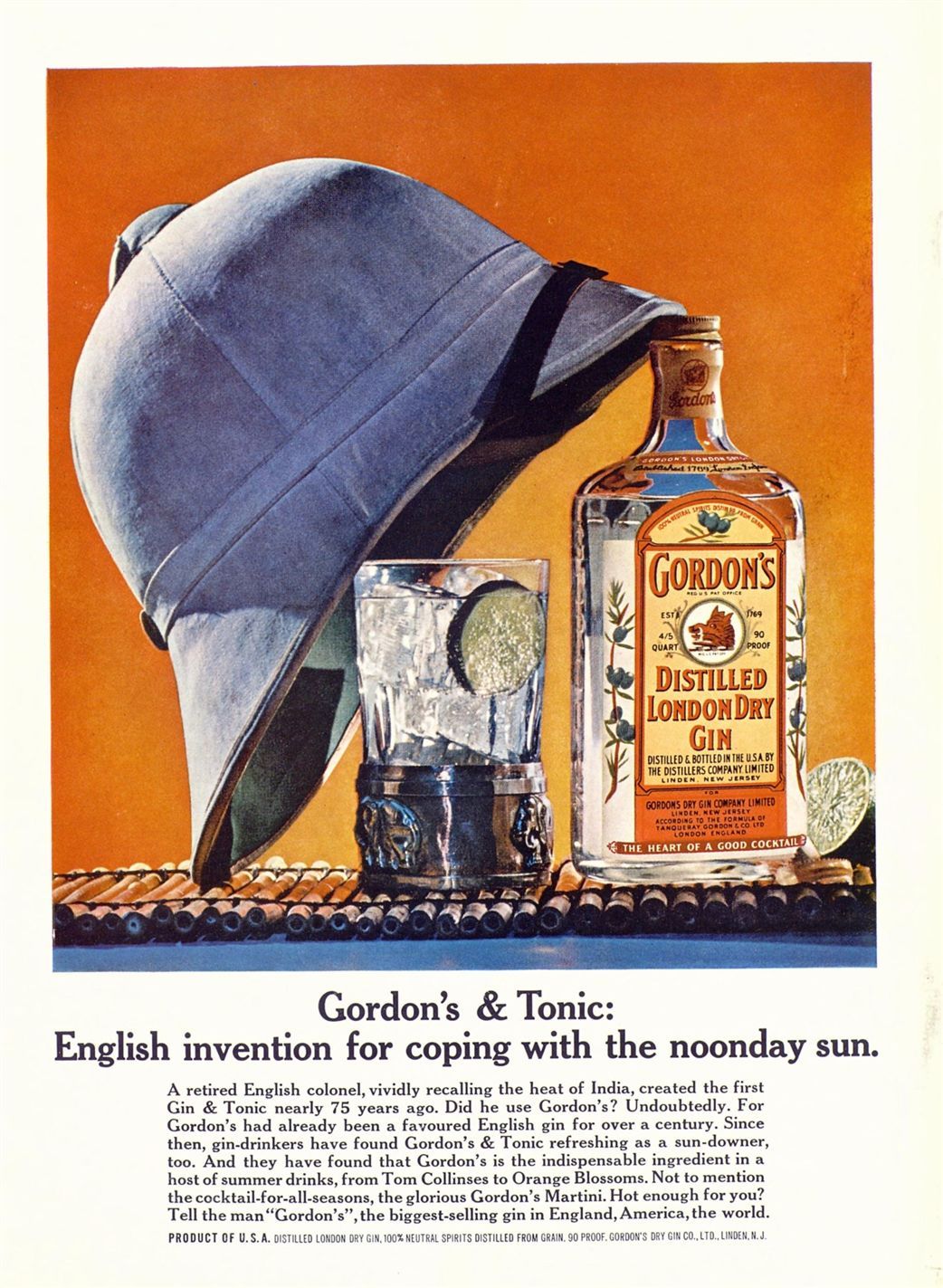
This technological leap gave birth to the “London Dry” style, which was unsweetened and beautifully, expertly refined. Gin moved from the gutter to the “Gin Palaces” – which is more akin to the refined gin bars we enjoy today. It was these elaborately decorated bars that paved the way for modern cocktail culture. During this period, British soldiers in India began mixing their gin rations with quinine-rich tonic water to prevent malaria, creating the iconic Gin & Tonic. A drink that needs no introduction.
A measure of tonic for the malaria, a measure of gin for the boredom.
A Modern Renaissance: 2009 until the Present
For decades, the UK industry was stifled by the 1823 Excise Act, which banned stills smaller than 1,800 litres. This effectively outlawed small-batch craft production, allowing only those with huge investments to enter the market – law which would have prevented our own company from ever existing.
In 2009, after a two-year legal battle, Sipsmiths were granted the first small-batch license in London since 1820. This “Sipsmith Law” broke the monopoly of global giants and triggered a massive gin boom – culminating in several distilleries opening up in Edinburgh. By 2024, the UK boasted over 900 distilleries, with gin contributing billions to the economy.
Today, the story of gin has come full circle. No longer just a commercial product, modern distillers are using their stills to “distil change” in their communities. We see carbon-negative distilleries using solar power and upcycled botanicals, and social enterprises like the Better World Distilling movement, which reinvest profits into local conservation and education.
Modern gin isn’t just a spirit; it’s a vehicle for social impact, proving that the once-hated “Mother’s Ruin” is now a force for community good.