
Welcome to the Dell Botanist Diary: a few pages to draw you back from modern digital chaos to a place where our beautiful botanical garden’s flourishing nature meets time, precision and craft.
Our philosophy is rooted in a fascination with how botanical extracts can shape human mood, atmosphere, and sensory experience. This was an understanding rooted – like ivy – deeply through the past, and the very reason botanical gardens were valued by the generations before us.
We are reviving these lost traditions and using our diary to explore each botanical for its traditional values and to unlock their wonderful flavours within our stills. In doing so, we create a spirit that interweaves complex flavour with atmospheric experience – crafted to pair perfectly with a singular moment.
Take your time. Today, we’re talking about Gorse Flower.
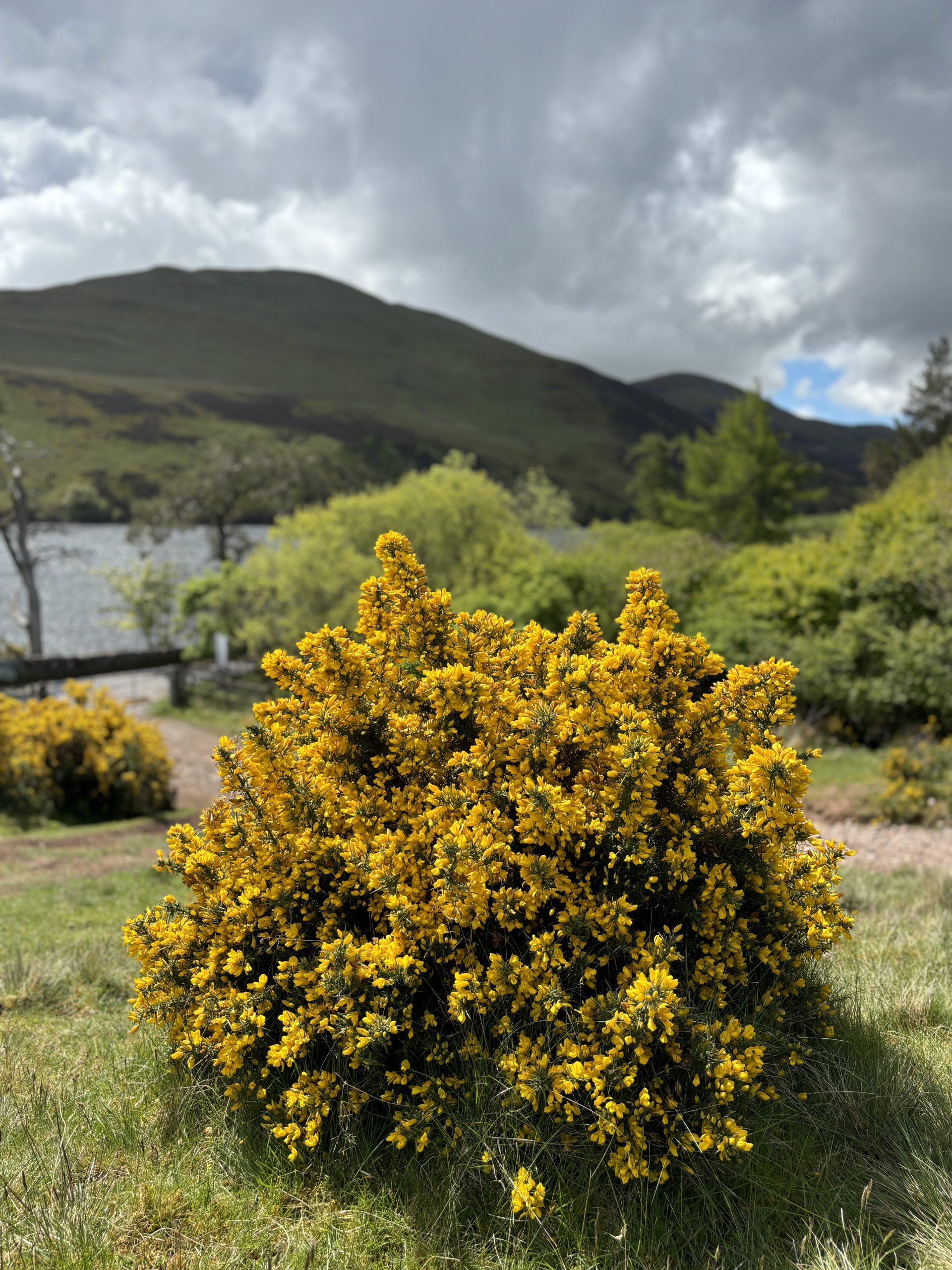
Of Gorse Flower – Ulex europaeus & Ulex gallii
Without Gorse blossoms, our hillsides would look decidedly barren. Foraging gorse for traditional country wines and cordials was first documented across the British Isles centuries ago, roughly the 4th and 5th centuries AD.
Gorse is a species of hardy shrub in the Ulex branch of the pea and legume family, Fabaceae. It is an incredibly resilient plant, possessing formidable, needle-like spines instead of traditional leaves and a unique, persistent blooming cycle that keeps it flowering almost all year round
Traditionally, in early modern folk medicine, physicians and healers believed gorse (Ulex europaeus) to be a potent remedy to lift heavy spirits, clear the blood, and soothe internal heat. Ancient and indigenous cultures historically utilised its vibrant blossoms, seeds, and bark with the intent to treat ailments ranging from jaundice and scarlet fever to heart ailments and physical swellings.
The undisputed heart of Dell & Dial’s seasonal expressions. Gorseflower is so much more than a simple additive for gin; it’s an atmospheric anchor that pulls the brighter, more delicate floral notes together.
Where: Origin & it can be foraged.
Origin: Historically, Gorse has been deeply abundant across Western Europe and the British Isles, thriving in rugged coastal heaths, moorlands and highlands. Its ability to enrich poor soil aided its spread. Gorse has also spread as far south as Portugal and Spain.
In the Dell: Gorse is grows in the across Scotland, in all kids of places. The plant blankets of yellow cascade down the hillsides of the Pentland Hills overlooking the Water of Leith and around Colinton Dell. The flowers are easy to pluck away, and this is what we use – the spikey leaves, stems, and seeds should not be foraged.
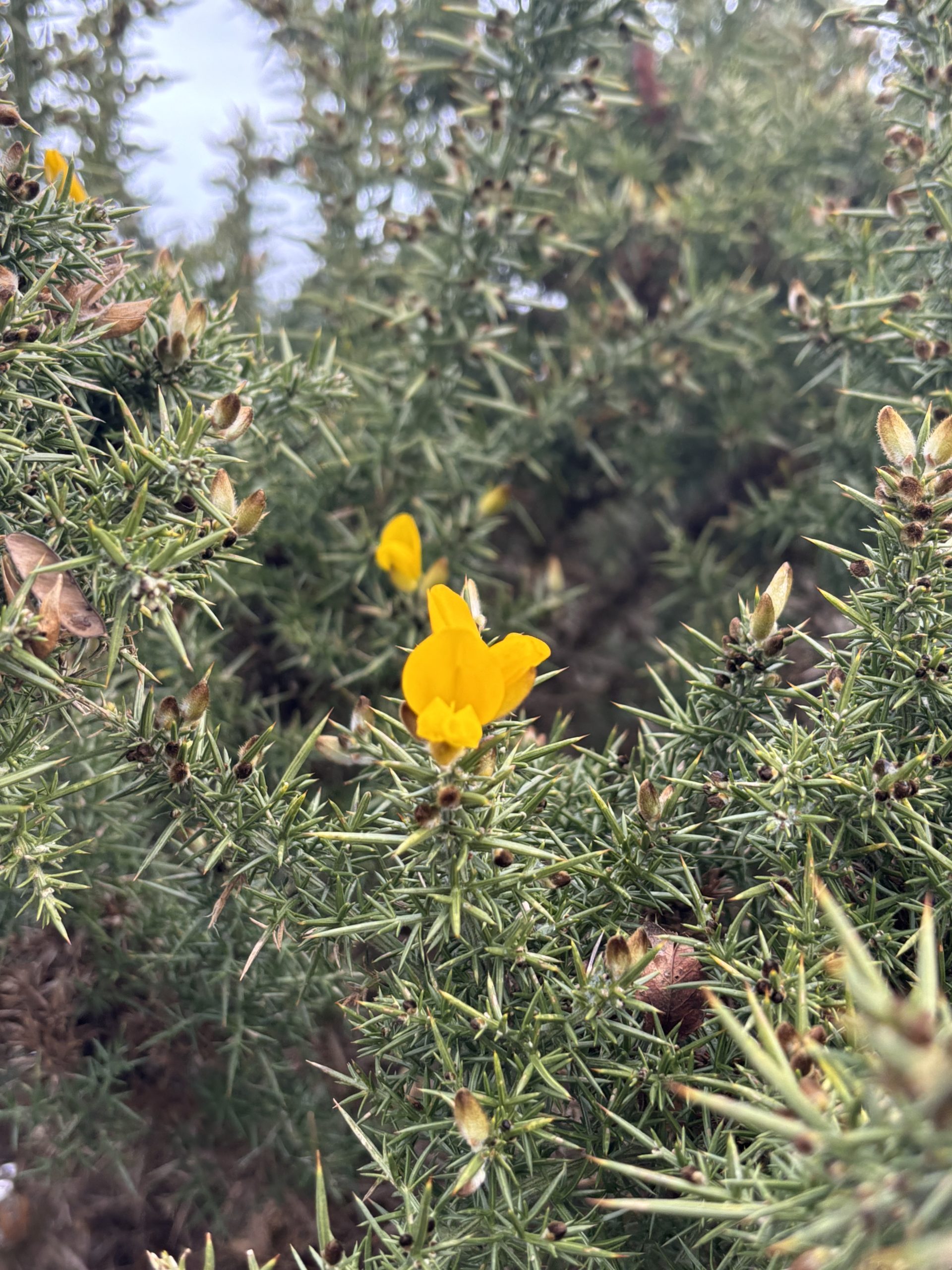
Why: How was Gorse used traditionally?
Traditional Uses & Values: Gorse was a prized plant in pagan, pre-Christian Scottish traditions. Its prominence during Samhain and Beltane is notable (celebrated between the spring equinox and the summer solstice), as the plant represented the coming of summer, which explains its traditional connotations of hope, happiness, and longevity. Since then, there has been a long tradition of producing beer, wine, and tea using gorse flowers.
In the 16th century, physician and botanist John Gerard regarded the use of gorse seeds as beneficial for renal health, and later, 17th-century physician Nicholas Culpeper prescribed the flowers and leaves to “clear the liver and spleen of obstructions,” as well as using them to treat jaundice and—interestingly—snake bites.
Flavour: Gorse blossoms on their own can be astringent and green, with unpleasant grassy notes; when extracted into an alcoholic spirit, this sharp astringency is softened, and the complex, rich aromas of warm coconut, sweet vanilla honey, and nutty-almond shine through. You can expect notes of sun-warmed vanilla, bright floral sweetness, with a comforting, buttery mouthfeel.
How it feels: The notes are smooth, creamy, comforting and uplifting; the mouthfeel is velvety and smooth. While the top notes are of sweet vanilla honey, almonds and cream, there is a complementary tangy, grassy note that balances the flavours beautifully together.
“My assoications of Gorse comes from summer walks in the Pentland foot hills where it grows wildly; on a warm day, you can smell the nutty sweetness of the flowers. The botanical’s falvours are complex, sweet, creamy; they make me think of warm sunshine – but also of being home.”
— Ian: Dell & Dial co-founder.
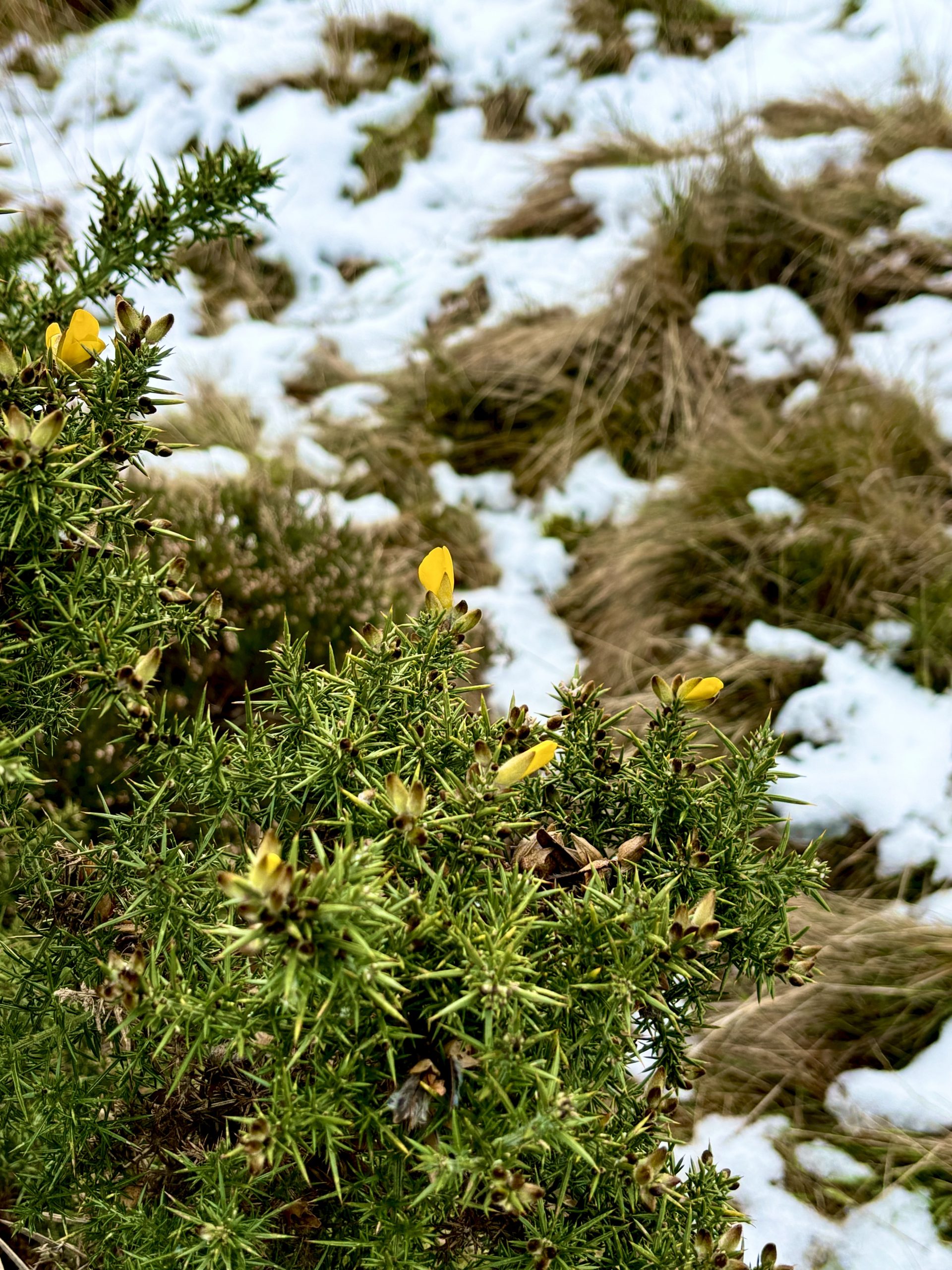
How we use Gorseflower
Gorseflower is a delicate flavour that can be easily lost in a gin with other strong flavours. In our summer gin, it makes up the body of the flavours, which are sweet, floral and rolling, to represent the rolling hills of the Scottish lowland peaks. Not only is this where the Gorse grows in the wild, but it also perfectly encapsulates the feeling of a summer hill walk along the undulating peaks.
We extract the flavours using copper Bain-Marie stills. It takes much more time, but our patience is rewarded. The stills use indirect, gentle heat which coaxes out the succulent, velvety oils without scorching the petals’ delicate, volatile top-notes. It produces a more floral and honeyed flavour, rather than sharp and overly intense.
The best pairing with Gorseflower is sweet, so to balance the flavour, we need some acidity. We recommend a slice of lime to complement the gorse’s grassy citrus notes and let the warmth shine.